Buy kamagraonlinekopen.be ?
We are moving the project
kamagraonlinekopen.be .
Are you interested in purchasing the domain
kamagraonlinekopen.be ?
domain@kv-gmbh.de · 0541-91531010
Buy kamagraonlinekopen.be ?
What is the Herero genocide?
The Herero genocide, also known as the Herero and Namaqua genocide, was a campaign of racial extermination and collective punishment carried out by the German Empire against the Herero and Nama peoples in German South West Africa (now Namibia) from 1904 to 1908. It is considered one of the first genocides of the 20th century. The genocide was characterized by mass killings, forced labor, concentration camps, and the confiscation of land and livestock. An estimated 65,000 Herero, or about 80% of the population, and 10,000 Nama, or about 50% of the population, were killed during the genocide. **
What are the Herero and Nama?
The Herero and Nama are indigenous ethnic groups in Namibia, primarily located in the southern part of the country. They have a rich cultural heritage and are known for their distinctive traditional clothing and jewelry. Both groups have a history of resistance against German colonial rule in the early 20th century, which resulted in the Herero and Nama genocide. Today, they continue to preserve their cultural traditions and languages while also advocating for their rights and recognition. **

Similar search terms for Herero
Top-Angebote
Products related to Herero:
-
What is the meaning of Herero and Nama?
Herero and Nama are ethnic groups primarily located in Namibia. The Herero people are known for their distinctive traditional clothing, which includes long dresses and headdresses for women, and military-style uniforms for men. The Nama people are known for their history of resistance against German colonization in the late 19th and early 20th centuries. Both groups have rich cultural traditions and languages that are an important part of Namibia's diverse heritage. **
-
Why were the Herero and Nama not compensated?
The Herero and Nama were not compensated for the atrocities committed against them during the German colonial rule in Namibia because the German government did not officially recognize the events as genocide until 2015. This delayed recognition meant that there was no legal framework in place for compensation. Additionally, the German government has been hesitant to provide direct financial compensation, instead opting for development aid and projects in Namibia as a form of reparation. The issue of compensation is also complicated by the fact that the Namibian government has been involved in negotiations with Germany, and there are differing opinions within the affected communities about what form compensation should take. **
-
Why are the Herero and Nama not being compensated?
The Herero and Nama people are not being compensated for the atrocities committed against them during the German colonial rule in Namibia because the German government has not officially recognized the events as genocide. Without this recognition, there is no legal obligation for the German government to provide compensation. Additionally, negotiations between the German and Namibian governments have been ongoing for many years, but progress has been slow due to disagreements over the terms of an official apology and reparations. This lack of recognition and slow progress in negotiations has left the Herero and Nama people without the compensation they seek and deserve. **
-
Will Germany finally pay compensation to the Herero and Nama?
It is difficult to predict whether Germany will finally pay compensation to the Herero and Nama people. The German government has acknowledged the atrocities committed during the colonial era in Namibia and has been in negotiations with the Namibian government for several years. In 2021, Germany officially recognized the events as genocide and committed to a financial aid package, but it is unclear if this will be considered as full compensation. The issue is complex and involves not only financial compensation but also issues of acknowledgment, apology, and reconciliation. Therefore, the final decision on compensation will depend on the outcome of ongoing negotiations and the willingness of both parties to reach a just resolution. **
Should the compensation for the Herero and Nama be higher?
Yes, the compensation for the Herero and Nama should be higher. The atrocities committed against these indigenous groups by German colonial forces in the early 20th century resulted in the loss of thousands of lives and the displacement of many more. The current compensation offered by the German government does not adequately address the magnitude of the harm caused, and a higher compensation would be a more meaningful acknowledgment of the suffering endured by the Herero and Nama people. Additionally, a higher compensation could contribute to the ongoing efforts to address the long-term impacts of colonialism on these communities. **
Should Germany pay reparations to the Herero and Nama people?
Yes, Germany should pay reparations to the Herero and Nama people. The German colonial forces committed atrocities against these indigenous groups in Namibia during the early 20th century, including mass killings and forced labor. These actions resulted in the deaths of thousands of people and the displacement of many more. By acknowledging the historical injustices and providing reparations, Germany can take responsibility for its past actions and contribute to the healing and reconciliation of the affected communities. Additionally, reparations can help address the ongoing socio-economic disparities and intergenerational trauma experienced by the Herero and Nama people. **
Top-Angebote
Products related to Herero:
-
Missha All Around Safe Block Cotton Sun Stick crème solaire visage waterproof en stick SPF 50+ 17 gMissha All Around Safe Block Cotton Sun Stick, 17 g, Protection contre le rayonnement solaire pour femme, Protégez votre peau du vieillissement prématuré et des autres dégradations causées par le soleil. La peau délicate du visage est beaucoup plus sensible que celle du reste du corps. En outre, elle est exposée aux rayons du soleil toute l'année. C'est pourquoi il est important de ne pas sous-estimer sa protection. Le produit de bronzage Missha All Around Safe Block Cotton Sun Stick protège efficacement la peau de votre visage contre les rayons UV et vous aide ainsi à prévenir les coups de soleil ou l'apparition de taches pigmentaires et à diminuer l'élasticité de la peau, la perte de collagène et autres signes de l’âge. Le produit : minimise la production excessive de sébum cutané protège la peau contre le vieillissement prématuré apporte l’hydratation et les nutriments dont la peau a besoin protège la peau contre les rayons UVA et UVB application pratique et hygiénique apaise la peau irritée résiste à l’eau hypoallergénique Composition du produit : extrait de Gotu kola : restaure la barrière cutanée, la renforce, soutient les processus régénératifs, atténue les irritations, lutte contre les rougeurs et la sécheresse, présente des effets antioxydants, hydrate la peau, aide à prévenir le vieillissement cutané panthénol : exerce une action hydratante et apaisante, réduit les irritations, les rougeurs, la sécheresse et les sensations d’inconfort produit végétalien Mode d’emploi : Appliquez sur une peau propre avant l’exposition au soleil. Appliquez les solaires en quantités suffisantes et à plusieurs reprises.21,90 €*Shipping: 3,45 €Secure redirect to the provider
-
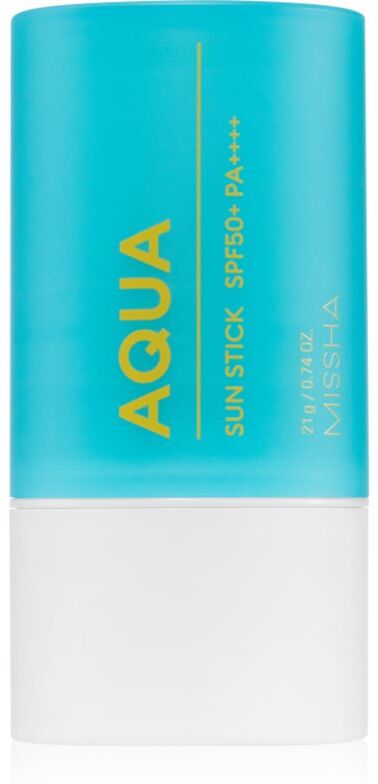
Missha All Around Safe Block Aqua Sun Stick crème solaire en stick pour une hydratation intense SPF 50+ 21 gMissha All Around Safe Block Aqua Sun Stick, 21 g, Protection contre le rayonnement solaire pour femme, Protégez votre peau du vieillissement prématuré et des autres dégradations causées par le soleil. La peau délicate du visage est beaucoup plus sensible que celle du reste du corps. En outre, elle est exposée aux rayons du soleil toute l'année. C'est pourquoi il est important de ne pas sous-estimer sa protection. Le produit de bronzage Missha All Around Safe Block Aqua Sun Stick protège efficacement la peau de votre visage contre les rayons UV et vous aide ainsi à prévenir les coups de soleil ou l'apparition de taches pigmentaires et à diminuer l'élasticité de la peau, la perte de collagène et autres signes de l’âge. Le produit : apaise la peau irritée et rougie protège la peau contre les rayons UVA et UVB application pratique et hygiénique réduction des taches pigmentaires donne de la fraîcheur et de la luminosité à votre peau rétracte les pores dilatés hydrate intensément unifie le teint de la peau nourrit en profondeur Composition du produit : niacinamide : augmente l’éclat de la peau, réduit les taches pigmentaires, unifie le teint, lisse les irrégularités de texture, aide à renforcer la barrière cutanée protectrice et à améliorer ainsi le niveau d’hydratation de la peau acide hyaluronique : fixe une grande quantité d’eau et hydrate intensément adénosine – possède des propriétés apaisantes et prévient les démangeaisons produit végétalien Mode d’emploi : Appliquez le produit environ 30 minutes avant d’exposer la peau aux rayons du soleil. Remettez-en une couche si nécessaire.21,90 €*Shipping: 3,45 €Secure redirect to the provider
-
What is the Herero genocide?
The Herero genocide, also known as the Herero and Namaqua genocide, was a campaign of racial extermination and collective punishment carried out by the German Empire against the Herero and Nama peoples in German South West Africa (now Namibia) from 1904 to 1908. It is considered one of the first genocides of the 20th century. The genocide was characterized by mass killings, forced labor, concentration camps, and the confiscation of land and livestock. An estimated 65,000 Herero, or about 80% of the population, and 10,000 Nama, or about 50% of the population, were killed during the genocide. **
-
What are the Herero and Nama?
The Herero and Nama are indigenous ethnic groups in Namibia, primarily located in the southern part of the country. They have a rich cultural heritage and are known for their distinctive traditional clothing and jewelry. Both groups have a history of resistance against German colonial rule in the early 20th century, which resulted in the Herero and Nama genocide. Today, they continue to preserve their cultural traditions and languages while also advocating for their rights and recognition. **
-
What is the meaning of Herero and Nama?
Herero and Nama are ethnic groups primarily located in Namibia. The Herero people are known for their distinctive traditional clothing, which includes long dresses and headdresses for women, and military-style uniforms for men. The Nama people are known for their history of resistance against German colonization in the late 19th and early 20th centuries. Both groups have rich cultural traditions and languages that are an important part of Namibia's diverse heritage. **
-
Why were the Herero and Nama not compensated?
The Herero and Nama were not compensated for the atrocities committed against them during the German colonial rule in Namibia because the German government did not officially recognize the events as genocide until 2015. This delayed recognition meant that there was no legal framework in place for compensation. Additionally, the German government has been hesitant to provide direct financial compensation, instead opting for development aid and projects in Namibia as a form of reparation. The issue of compensation is also complicated by the fact that the Namibian government has been involved in negotiations with Germany, and there are differing opinions within the affected communities about what form compensation should take. **
Similar search terms for Herero
-
Why are the Herero and Nama not being compensated?
The Herero and Nama people are not being compensated for the atrocities committed against them during the German colonial rule in Namibia because the German government has not officially recognized the events as genocide. Without this recognition, there is no legal obligation for the German government to provide compensation. Additionally, negotiations between the German and Namibian governments have been ongoing for many years, but progress has been slow due to disagreements over the terms of an official apology and reparations. This lack of recognition and slow progress in negotiations has left the Herero and Nama people without the compensation they seek and deserve. **
-
Will Germany finally pay compensation to the Herero and Nama?
It is difficult to predict whether Germany will finally pay compensation to the Herero and Nama people. The German government has acknowledged the atrocities committed during the colonial era in Namibia and has been in negotiations with the Namibian government for several years. In 2021, Germany officially recognized the events as genocide and committed to a financial aid package, but it is unclear if this will be considered as full compensation. The issue is complex and involves not only financial compensation but also issues of acknowledgment, apology, and reconciliation. Therefore, the final decision on compensation will depend on the outcome of ongoing negotiations and the willingness of both parties to reach a just resolution. **
-
Should the compensation for the Herero and Nama be higher?
Yes, the compensation for the Herero and Nama should be higher. The atrocities committed against these indigenous groups by German colonial forces in the early 20th century resulted in the loss of thousands of lives and the displacement of many more. The current compensation offered by the German government does not adequately address the magnitude of the harm caused, and a higher compensation would be a more meaningful acknowledgment of the suffering endured by the Herero and Nama people. Additionally, a higher compensation could contribute to the ongoing efforts to address the long-term impacts of colonialism on these communities. **
-
Should Germany pay reparations to the Herero and Nama people?
Yes, Germany should pay reparations to the Herero and Nama people. The German colonial forces committed atrocities against these indigenous groups in Namibia during the early 20th century, including mass killings and forced labor. These actions resulted in the deaths of thousands of people and the displacement of many more. By acknowledging the historical injustices and providing reparations, Germany can take responsibility for its past actions and contribute to the healing and reconciliation of the affected communities. Additionally, reparations can help address the ongoing socio-economic disparities and intergenerational trauma experienced by the Herero and Nama people. **
* All prices are inclusive of VAT and, if applicable, plus shipping costs. The offer information is based on the details provided by the respective shop and is updated through automated processes. Real-time updates do not occur, so deviations can occur in individual cases. ** Note: Parts of this content were created by AI.