Buy kamagraonlinekopen.be ?
We are moving the project
kamagraonlinekopen.be .
Are you interested in purchasing the domain
kamagraonlinekopen.be ?
domain@kv-gmbh.de · 0541-91531010
Buy kamagraonlinekopen.be ?
Who is Napoleon?
Napoleon Bonaparte was a French military and political leader who rose to prominence during the French Revolution. He became the Emperor of the French from 1804 to 1814 and again in 1815. Napoleon is known for his military conquests and his significant impact on European history. He implemented a series of reforms in France and across the territories he conquered, leaving a lasting legacy on the political and legal systems of many countries. **
What did Napoleon do?
Napoleon Bonaparte was a military general and the first Emperor of France. He rose to power during the French Revolution and implemented a series of military victories that expanded the French Empire across Europe. Napoleon also introduced several reforms in France, such as the Napoleonic Code, which had a lasting impact on the country's legal system. However, his aggressive expansionist policies eventually led to his downfall, as he was defeated at the Battle of Waterloo in 1815. **

Similar search terms for Napoleon
Top-Angebote
Products related to Napoleon:
-
Is Napoleon Bonaparte megalomaniac?
Napoleon Bonaparte is often described as megalomaniacal due to his ambitious and power-hungry nature. He sought to expand his empire and conquer other nations, demonstrating a desire for control and dominance. His grandiose vision of himself as a ruler and his willingness to engage in military conquests to achieve his goals are often cited as evidence of his megalomania. However, some historians argue that his actions were driven by a desire to bring stability and order to Europe, rather than purely by personal ambition. Ultimately, whether or not Napoleon was megalomaniacal is a matter of interpretation and debate among historians. **
-
Was Napoleon a Jacobin?
Napoleon was not a Jacobin. While he initially supported the ideals of the French Revolution, he eventually distanced himself from the radical Jacobin faction and sought to consolidate his own power as a military leader. Napoleon's rise to power and establishment of the French Empire marked a departure from the revolutionary principles of the Jacobins, as he centralized authority and established a more authoritarian regime. Therefore, while Napoleon may have been influenced by the ideas of the French Revolution, he cannot be considered a Jacobin. **
-
Why was Napoleon hated?
Napoleon was hated for several reasons. Firstly, his aggressive military campaigns and expansionist policies led to widespread destruction and loss of life across Europe. Additionally, his authoritarian rule and suppression of political opposition led to resentment among those who sought greater freedom and democracy. Furthermore, his self-appointed title as Emperor and his establishment of a hereditary monarchy were seen as a betrayal of the ideals of the French Revolution. Lastly, his policies, such as the Continental System and high taxation, caused economic hardship for many people, further fueling their dislike of him. **
-
What was Napoleon like?
Napoleon was known for his ambition, intelligence, and charisma. He was a skilled military leader and a shrewd politician, rising to power as the Emperor of France. He was also known for his authoritarian rule and expansionist policies, which led to conflicts with other European powers. Despite his controversial legacy, Napoleon is remembered for his significant impact on European history and his lasting influence on military strategy and governance. **
How did Napoleon rule?
Napoleon ruled as a military dictator, consolidating power through a coup d'état in 1799 and eventually declaring himself Emperor in 1804. He centralized authority, reformed the legal and administrative systems, and implemented a code of laws known as the Napoleonic Code. He also expanded the French Empire through military conquests and alliances, imposing French influence and control over much of Europe. Despite his authoritarian rule, Napoleon's reforms and military successes contributed to the spread of revolutionary ideals and the modernization of many European countries. **
Did Napoleon promote German unity?
Napoleon did not actively promote German unity as a deliberate policy goal. However, his military campaigns and administrative reforms inadvertently contributed to the eventual unification of Germany. The dissolution of the Holy Roman Empire by Napoleon in 1806 led to the emergence of a number of independent German states, setting the stage for future unification efforts. Additionally, Napoleon's introduction of the Napoleonic Code and other reforms helped to modernize and centralize the German states, laying the groundwork for the eventual creation of a unified German nation in the 19th century. **
Top-Angebote
Products related to Napoleon:
-
Missha All Around Safe Block Cotton Sun Stick crème solaire visage waterproof en stick SPF 50+ 17 gMissha All Around Safe Block Cotton Sun Stick, 17 g, Protection contre le rayonnement solaire pour femme, Protégez votre peau du vieillissement prématuré et des autres dégradations causées par le soleil. La peau délicate du visage est beaucoup plus sensible que celle du reste du corps. En outre, elle est exposée aux rayons du soleil toute l'année. C'est pourquoi il est important de ne pas sous-estimer sa protection. Le produit de bronzage Missha All Around Safe Block Cotton Sun Stick protège efficacement la peau de votre visage contre les rayons UV et vous aide ainsi à prévenir les coups de soleil ou l'apparition de taches pigmentaires et à diminuer l'élasticité de la peau, la perte de collagène et autres signes de l’âge. Le produit : minimise la production excessive de sébum cutané protège la peau contre le vieillissement prématuré apporte l’hydratation et les nutriments dont la peau a besoin protège la peau contre les rayons UVA et UVB application pratique et hygiénique apaise la peau irritée résiste à l’eau hypoallergénique Composition du produit : extrait de Gotu kola : restaure la barrière cutanée, la renforce, soutient les processus régénératifs, atténue les irritations, lutte contre les rougeurs et la sécheresse, présente des effets antioxydants, hydrate la peau, aide à prévenir le vieillissement cutané panthénol : exerce une action hydratante et apaisante, réduit les irritations, les rougeurs, la sécheresse et les sensations d’inconfort produit végétalien Mode d’emploi : Appliquez sur une peau propre avant l’exposition au soleil. Appliquez les solaires en quantités suffisantes et à plusieurs reprises.21,90 €*Shipping: 3,45 €Secure redirect to the provider
-
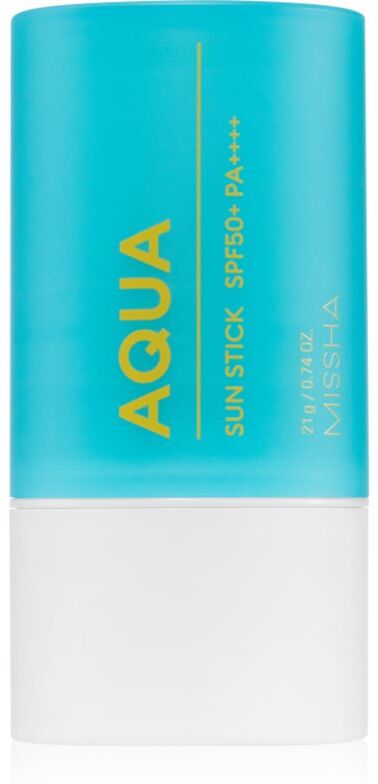
Missha All Around Safe Block Aqua Sun Stick crème solaire en stick pour une hydratation intense SPF 50+ 21 gMissha All Around Safe Block Aqua Sun Stick, 21 g, Protection contre le rayonnement solaire pour femme, Protégez votre peau du vieillissement prématuré et des autres dégradations causées par le soleil. La peau délicate du visage est beaucoup plus sensible que celle du reste du corps. En outre, elle est exposée aux rayons du soleil toute l'année. C'est pourquoi il est important de ne pas sous-estimer sa protection. Le produit de bronzage Missha All Around Safe Block Aqua Sun Stick protège efficacement la peau de votre visage contre les rayons UV et vous aide ainsi à prévenir les coups de soleil ou l'apparition de taches pigmentaires et à diminuer l'élasticité de la peau, la perte de collagène et autres signes de l’âge. Le produit : apaise la peau irritée et rougie protège la peau contre les rayons UVA et UVB application pratique et hygiénique réduction des taches pigmentaires donne de la fraîcheur et de la luminosité à votre peau rétracte les pores dilatés hydrate intensément unifie le teint de la peau nourrit en profondeur Composition du produit : niacinamide : augmente l’éclat de la peau, réduit les taches pigmentaires, unifie le teint, lisse les irrégularités de texture, aide à renforcer la barrière cutanée protectrice et à améliorer ainsi le niveau d’hydratation de la peau acide hyaluronique : fixe une grande quantité d’eau et hydrate intensément adénosine – possède des propriétés apaisantes et prévient les démangeaisons produit végétalien Mode d’emploi : Appliquez le produit environ 30 minutes avant d’exposer la peau aux rayons du soleil. Remettez-en une couche si nécessaire.21,90 €*Shipping: 3,45 €Secure redirect to the provider
-
Who is Napoleon?
Napoleon Bonaparte was a French military and political leader who rose to prominence during the French Revolution. He became the Emperor of the French from 1804 to 1814 and again in 1815. Napoleon is known for his military conquests and his significant impact on European history. He implemented a series of reforms in France and across the territories he conquered, leaving a lasting legacy on the political and legal systems of many countries. **
-
What did Napoleon do?
Napoleon Bonaparte was a military general and the first Emperor of France. He rose to power during the French Revolution and implemented a series of military victories that expanded the French Empire across Europe. Napoleon also introduced several reforms in France, such as the Napoleonic Code, which had a lasting impact on the country's legal system. However, his aggressive expansionist policies eventually led to his downfall, as he was defeated at the Battle of Waterloo in 1815. **
-
Is Napoleon Bonaparte megalomaniac?
Napoleon Bonaparte is often described as megalomaniacal due to his ambitious and power-hungry nature. He sought to expand his empire and conquer other nations, demonstrating a desire for control and dominance. His grandiose vision of himself as a ruler and his willingness to engage in military conquests to achieve his goals are often cited as evidence of his megalomania. However, some historians argue that his actions were driven by a desire to bring stability and order to Europe, rather than purely by personal ambition. Ultimately, whether or not Napoleon was megalomaniacal is a matter of interpretation and debate among historians. **
-
Was Napoleon a Jacobin?
Napoleon was not a Jacobin. While he initially supported the ideals of the French Revolution, he eventually distanced himself from the radical Jacobin faction and sought to consolidate his own power as a military leader. Napoleon's rise to power and establishment of the French Empire marked a departure from the revolutionary principles of the Jacobins, as he centralized authority and established a more authoritarian regime. Therefore, while Napoleon may have been influenced by the ideas of the French Revolution, he cannot be considered a Jacobin. **
Similar search terms for Napoleon
-
Why was Napoleon hated?
Napoleon was hated for several reasons. Firstly, his aggressive military campaigns and expansionist policies led to widespread destruction and loss of life across Europe. Additionally, his authoritarian rule and suppression of political opposition led to resentment among those who sought greater freedom and democracy. Furthermore, his self-appointed title as Emperor and his establishment of a hereditary monarchy were seen as a betrayal of the ideals of the French Revolution. Lastly, his policies, such as the Continental System and high taxation, caused economic hardship for many people, further fueling their dislike of him. **
-
What was Napoleon like?
Napoleon was known for his ambition, intelligence, and charisma. He was a skilled military leader and a shrewd politician, rising to power as the Emperor of France. He was also known for his authoritarian rule and expansionist policies, which led to conflicts with other European powers. Despite his controversial legacy, Napoleon is remembered for his significant impact on European history and his lasting influence on military strategy and governance. **
-
How did Napoleon rule?
Napoleon ruled as a military dictator, consolidating power through a coup d'état in 1799 and eventually declaring himself Emperor in 1804. He centralized authority, reformed the legal and administrative systems, and implemented a code of laws known as the Napoleonic Code. He also expanded the French Empire through military conquests and alliances, imposing French influence and control over much of Europe. Despite his authoritarian rule, Napoleon's reforms and military successes contributed to the spread of revolutionary ideals and the modernization of many European countries. **
-
Did Napoleon promote German unity?
Napoleon did not actively promote German unity as a deliberate policy goal. However, his military campaigns and administrative reforms inadvertently contributed to the eventual unification of Germany. The dissolution of the Holy Roman Empire by Napoleon in 1806 led to the emergence of a number of independent German states, setting the stage for future unification efforts. Additionally, Napoleon's introduction of the Napoleonic Code and other reforms helped to modernize and centralize the German states, laying the groundwork for the eventual creation of a unified German nation in the 19th century. **
* All prices are inclusive of VAT and, if applicable, plus shipping costs. The offer information is based on the details provided by the respective shop and is updated through automated processes. Real-time updates do not occur, so deviations can occur in individual cases. ** Note: Parts of this content were created by AI.