Buy kamagraonlinekopen.be ?
We are moving the project
kamagraonlinekopen.be .
Are you interested in purchasing the domain
kamagraonlinekopen.be ?
domain@kv-gmbh.de · 0541-91531010
Buy kamagraonlinekopen.be ?
What is the temperate zone 2?
The temperate zone 2 is a region of the Earth located between the Tropic of Cancer and the Arctic Circle in the Northern Hemisphere, and between the Tropic of Capricorn and the Antarctic Circle in the Southern Hemisphere. This zone experiences moderate temperatures and distinct seasons, with warm summers and cool winters. It is characterized by a diverse range of ecosystems, including deciduous forests, grasslands, and some areas of Mediterranean climate. The temperate zone 2 is home to a wide variety of plant and animal species adapted to its seasonal climate. **
What is a temperate maritime climate?
A temperate maritime climate is characterized by mild temperatures and moderate rainfall due to the influence of the nearby ocean. This type of climate is typically found in coastal regions and is known for its relatively stable and mild weather conditions. Winters are usually mild and summers are cool, with a narrow temperature range throughout the year. The presence of the ocean helps to moderate temperature extremes and create a more stable climate. **

Similar search terms for Temperate
Top-Angebote
Products related to Temperate:
-
Which countries are located in the temperate zone?
Countries located in the temperate zone include the United States, Canada, Japan, China, Australia, Argentina, and parts of Europe such as France, Germany, and the United Kingdom. These countries experience four distinct seasons with moderate temperatures and are located between the Tropic of Cancer and the Arctic Circle in the Northern Hemisphere, and between the Tropic of Capricorn and the Antarctic Circle in the Southern Hemisphere. **
-
How does the nutrient cycle work in temperate regions?
In temperate regions, the nutrient cycle works through a series of processes that involve the movement and transformation of nutrients such as carbon, nitrogen, and phosphorus. These nutrients are taken up by plants from the soil, then transferred to animals through consumption. When plants and animals die, their organic matter decomposes, releasing nutrients back into the soil. These nutrients are then recycled and reused by plants, completing the cycle. Additionally, weathering of rocks and minerals also contributes to the availability of nutrients in temperate regions. **
-
What is the climate like in the temperate zone?
The climate in the temperate zone is characterized by four distinct seasons - spring, summer, fall, and winter. The temperatures in this zone are moderate, with warm summers and cool winters. The temperate zone typically experiences a good amount of rainfall throughout the year, which supports a variety of vegetation. Overall, the climate in the temperate zone is generally pleasant and conducive to a diverse range of plant and animal life. **
-
What are the temperate zones in the mid-latitudes?
The temperate zones in the mid-latitudes are regions located between the Tropic of Cancer and the Arctic Circle in the Northern Hemisphere, and between the Tropic of Capricorn and the Antarctic Circle in the Southern Hemisphere. These zones experience moderate temperatures compared to the tropics and polar regions, with distinct seasons including warm summers and cool winters. The temperate zones are characterized by a variety of ecosystems, including deciduous forests, grasslands, and Mediterranean climates, making them highly diverse in terms of flora and fauna. **
How are plants cultivated in agriculture in the temperate zone?
In the temperate zone, plants are cultivated in agriculture through a variety of methods. These include crop rotation, where different crops are planted in the same field in successive seasons to improve soil fertility and reduce pests and diseases. Additionally, farmers may use greenhouses or high tunnels to extend the growing season and protect plants from harsh weather. In some cases, irrigation systems are used to ensure that plants receive enough water, especially during dry periods. Finally, farmers may also use technology such as tractors and other machinery to help with planting, harvesting, and other tasks. **
Where is there uncertainty in the division of the temperate zone?
There is uncertainty in the division of the temperate zone primarily at its boundaries. The exact demarcation between the temperate zone and the tropical or polar zones can vary depending on the criteria used, such as temperature, climate, or vegetation. Additionally, with climate change and shifting weather patterns, the boundaries of the temperate zone may be subject to change over time, adding further uncertainty to its division. **
Top-Angebote
Products related to Temperate:
-
Missha All Around Safe Block Cotton Sun Stick crème solaire visage waterproof en stick SPF 50+ 17 gMissha All Around Safe Block Cotton Sun Stick, 17 g, Protection contre le rayonnement solaire pour femme, Protégez votre peau du vieillissement prématuré et des autres dégradations causées par le soleil. La peau délicate du visage est beaucoup plus sensible que celle du reste du corps. En outre, elle est exposée aux rayons du soleil toute l'année. C'est pourquoi il est important de ne pas sous-estimer sa protection. Le produit de bronzage Missha All Around Safe Block Cotton Sun Stick protège efficacement la peau de votre visage contre les rayons UV et vous aide ainsi à prévenir les coups de soleil ou l'apparition de taches pigmentaires et à diminuer l'élasticité de la peau, la perte de collagène et autres signes de l’âge. Le produit : minimise la production excessive de sébum cutané protège la peau contre le vieillissement prématuré apporte l’hydratation et les nutriments dont la peau a besoin protège la peau contre les rayons UVA et UVB application pratique et hygiénique apaise la peau irritée résiste à l’eau hypoallergénique Composition du produit : extrait de Gotu kola : restaure la barrière cutanée, la renforce, soutient les processus régénératifs, atténue les irritations, lutte contre les rougeurs et la sécheresse, présente des effets antioxydants, hydrate la peau, aide à prévenir le vieillissement cutané panthénol : exerce une action hydratante et apaisante, réduit les irritations, les rougeurs, la sécheresse et les sensations d’inconfort produit végétalien Mode d’emploi : Appliquez sur une peau propre avant l’exposition au soleil. Appliquez les solaires en quantités suffisantes et à plusieurs reprises.21,90 €*Shipping: 3,45 €Secure redirect to the provider
-
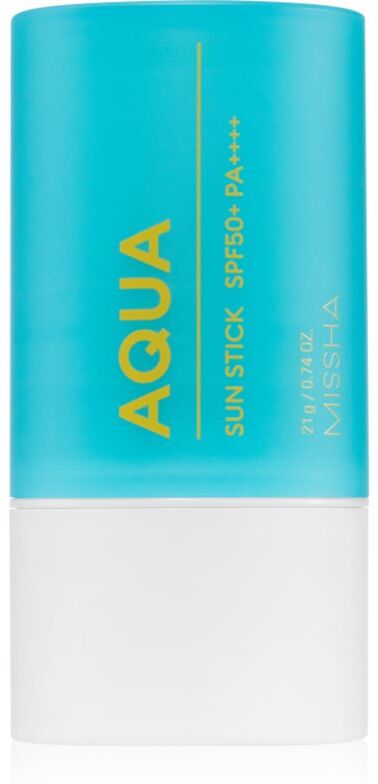
Missha All Around Safe Block Aqua Sun Stick crème solaire en stick pour une hydratation intense SPF 50+ 21 gMissha All Around Safe Block Aqua Sun Stick, 21 g, Protection contre le rayonnement solaire pour femme, Protégez votre peau du vieillissement prématuré et des autres dégradations causées par le soleil. La peau délicate du visage est beaucoup plus sensible que celle du reste du corps. En outre, elle est exposée aux rayons du soleil toute l'année. C'est pourquoi il est important de ne pas sous-estimer sa protection. Le produit de bronzage Missha All Around Safe Block Aqua Sun Stick protège efficacement la peau de votre visage contre les rayons UV et vous aide ainsi à prévenir les coups de soleil ou l'apparition de taches pigmentaires et à diminuer l'élasticité de la peau, la perte de collagène et autres signes de l’âge. Le produit : apaise la peau irritée et rougie protège la peau contre les rayons UVA et UVB application pratique et hygiénique réduction des taches pigmentaires donne de la fraîcheur et de la luminosité à votre peau rétracte les pores dilatés hydrate intensément unifie le teint de la peau nourrit en profondeur Composition du produit : niacinamide : augmente l’éclat de la peau, réduit les taches pigmentaires, unifie le teint, lisse les irrégularités de texture, aide à renforcer la barrière cutanée protectrice et à améliorer ainsi le niveau d’hydratation de la peau acide hyaluronique : fixe une grande quantité d’eau et hydrate intensément adénosine – possède des propriétés apaisantes et prévient les démangeaisons produit végétalien Mode d’emploi : Appliquez le produit environ 30 minutes avant d’exposer la peau aux rayons du soleil. Remettez-en une couche si nécessaire.21,90 €*Shipping: 3,45 €Secure redirect to the provider
-
What is the temperate zone 2?
The temperate zone 2 is a region of the Earth located between the Tropic of Cancer and the Arctic Circle in the Northern Hemisphere, and between the Tropic of Capricorn and the Antarctic Circle in the Southern Hemisphere. This zone experiences moderate temperatures and distinct seasons, with warm summers and cool winters. It is characterized by a diverse range of ecosystems, including deciduous forests, grasslands, and some areas of Mediterranean climate. The temperate zone 2 is home to a wide variety of plant and animal species adapted to its seasonal climate. **
-
What is a temperate maritime climate?
A temperate maritime climate is characterized by mild temperatures and moderate rainfall due to the influence of the nearby ocean. This type of climate is typically found in coastal regions and is known for its relatively stable and mild weather conditions. Winters are usually mild and summers are cool, with a narrow temperature range throughout the year. The presence of the ocean helps to moderate temperature extremes and create a more stable climate. **
-
Which countries are located in the temperate zone?
Countries located in the temperate zone include the United States, Canada, Japan, China, Australia, Argentina, and parts of Europe such as France, Germany, and the United Kingdom. These countries experience four distinct seasons with moderate temperatures and are located between the Tropic of Cancer and the Arctic Circle in the Northern Hemisphere, and between the Tropic of Capricorn and the Antarctic Circle in the Southern Hemisphere. **
-
How does the nutrient cycle work in temperate regions?
In temperate regions, the nutrient cycle works through a series of processes that involve the movement and transformation of nutrients such as carbon, nitrogen, and phosphorus. These nutrients are taken up by plants from the soil, then transferred to animals through consumption. When plants and animals die, their organic matter decomposes, releasing nutrients back into the soil. These nutrients are then recycled and reused by plants, completing the cycle. Additionally, weathering of rocks and minerals also contributes to the availability of nutrients in temperate regions. **
Similar search terms for Temperate
-
What is the climate like in the temperate zone?
The climate in the temperate zone is characterized by four distinct seasons - spring, summer, fall, and winter. The temperatures in this zone are moderate, with warm summers and cool winters. The temperate zone typically experiences a good amount of rainfall throughout the year, which supports a variety of vegetation. Overall, the climate in the temperate zone is generally pleasant and conducive to a diverse range of plant and animal life. **
-
What are the temperate zones in the mid-latitudes?
The temperate zones in the mid-latitudes are regions located between the Tropic of Cancer and the Arctic Circle in the Northern Hemisphere, and between the Tropic of Capricorn and the Antarctic Circle in the Southern Hemisphere. These zones experience moderate temperatures compared to the tropics and polar regions, with distinct seasons including warm summers and cool winters. The temperate zones are characterized by a variety of ecosystems, including deciduous forests, grasslands, and Mediterranean climates, making them highly diverse in terms of flora and fauna. **
-
How are plants cultivated in agriculture in the temperate zone?
In the temperate zone, plants are cultivated in agriculture through a variety of methods. These include crop rotation, where different crops are planted in the same field in successive seasons to improve soil fertility and reduce pests and diseases. Additionally, farmers may use greenhouses or high tunnels to extend the growing season and protect plants from harsh weather. In some cases, irrigation systems are used to ensure that plants receive enough water, especially during dry periods. Finally, farmers may also use technology such as tractors and other machinery to help with planting, harvesting, and other tasks. **
-
Where is there uncertainty in the division of the temperate zone?
There is uncertainty in the division of the temperate zone primarily at its boundaries. The exact demarcation between the temperate zone and the tropical or polar zones can vary depending on the criteria used, such as temperature, climate, or vegetation. Additionally, with climate change and shifting weather patterns, the boundaries of the temperate zone may be subject to change over time, adding further uncertainty to its division. **
* All prices are inclusive of VAT and, if applicable, plus shipping costs. The offer information is based on the details provided by the respective shop and is updated through automated processes. Real-time updates do not occur, so deviations can occur in individual cases. ** Note: Parts of this content were created by AI.